For UK players looking to claim a no-deposit sign-up offer without getting stung by hidden terms, our complete guide to free bonus on registration no deposit UK 2026 breaks down the real wagering requirements, eligible games, and maximum cashout limits so you can separate genuine value from empty promises.
With thousands of slot titles competing for your attention, our definitive guide to the best online slots UK 2026 cuts through the noise—highlighting the highest RTP games, most innovative bonus features, and the operators that actually deliver fair payouts and transparent terms.
If you value security and anonymity, our list of the best Paysafecard casino UK 2026 sites offers instant deposits without sharing any banking details, while still providing generous bonuses and a wide range of premium slots and table games.
For players who prioritise speed and convenience, our roundup of the best Skrill casino UK 2026 showcases operators that support rapid deposits and near-instant withdrawals via Skrill, alongside attractive welcome packages and ongoing promotions for loyal players.
If you prefer the seamless integration of Open Banking, our guide to the best Trustly casinos UK highlights platforms that offer one-click deposits and fast cashouts directly from your bank account, with no need for a separate e-wallet and no hidden fees.
For UK players seeking reputable alternatives to the GamStop scheme, our complete guide to independent gambling sites provides an honest assessment of the best UK casinos not on GamStop, covering their licensing, bonus structures, and what to watch out for before you deposit.
If you’re looking for a truly trustworthy platform to play for cash, this complete licensed guide and ratings to the best real money online casinos UK 2026 breaks down each operator’s payout speed, game fairness, and customer support quality, so you can choose a site that actually delivers on its promises.
Curious about free spins no deposit not on GamStop in the UK? This 2026 guide reveals the true value of these offers—from spin values and game restrictions to the realistic chances of turning those free rounds into withdrawable cash, all while navigating the non-GamStop landscape.
Before you claim any no-deposit spins, our complete analytical guide to free spins no deposit UK 2026 examines no-wager promotions, card verification steps, and the real-money cashout process, helping you identify the offers that are genuinely worth your time.
No-wagering free spins are often hailed as the holy grail, but this brutal truth about keeping what you win reveals the hidden catches behind these promotions—from maximum win caps to game restrictions—so you can approach them with your eyes wide open and avoid disappointment.
If you’re on a budget but still want to enjoy genuine casino action, our curated list of the best low deposit casinos UK highlights trusted sites that accept £1, £5, or £10 minimums—so you can access top slots and table games without breaking the bank.
Not all free-spin offers are created equal, and our ultimate list of 20–200 free spins no deposit UK 2026 breaks down the real value of each package, helping you compare spin values, wagering requirements, and game eligibility to find the deal that actually delivers.
For players ready to embrace digital currencies, our guide to the best crypto casinos UK 2026 features Bitcoin-friendly platforms that combine anonymity, instant transactions, and provably fair games—giving you both speed and privacy in every session.
If skipping ID checks is your priority, our unfiltered guide to the best no KYC casinos UK 2026 reveals which operators let you play without identity verification, along with the trade-offs in withdrawal limits and player protection, so you can decide if the convenience is worth the risk.
Speed of payouts and transparent terms are what truly separate the best from the rest, and our analysis of the best real money online casinos UK 2026 focuses on fast withdrawals, reliable payouts, and the key factors that actually matter—so you can choose a site that respects your time and your bankroll.
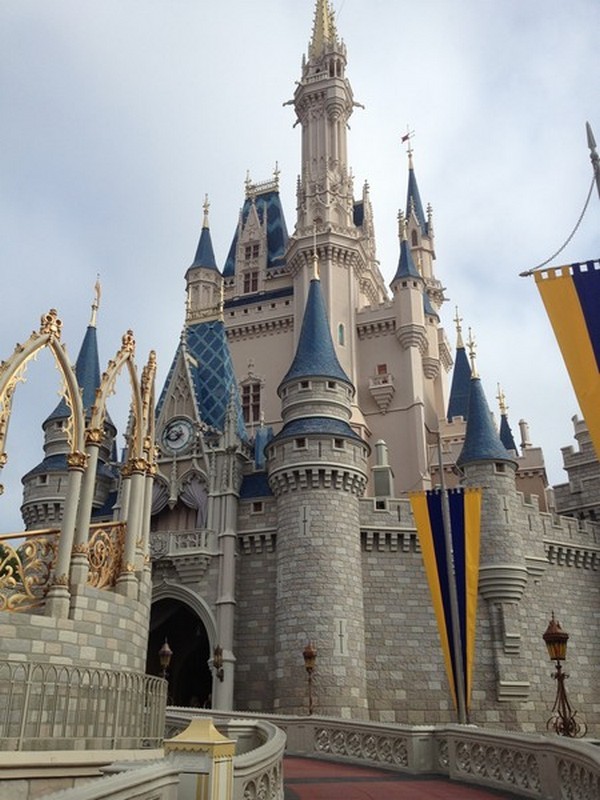 Yahoo Finance has officially named The Disney Company as the 2013 company of the year after 12 months that included the best box office results in history, the app of the year, a re-imagined crusie ship, and so much more.
The full report from Yahoo Finance:
Disney (DIS) is a 90-year-old company that’s also the first brand most two-year olds learn to love. The company was built on hand-drawn cartoons, yet its interactive Disney Animated program was Apple Inc.’s (AAPL) “2013 App of the Year” for the iPad.
The Walt Disney co. has honored the past, delivered in the present and positioned for the future better than any other American company. It’s the company’s successful striking of this rare balance – while focusing on careful financial stewardship and great customer experiences – that helped Disney edge out all others to be named this year’s Yahoo Finance Company of the Year.
For the second year, our editors and writers used a blend of quantitative and subjective standards to recognize one company for its financial performance, shareholder friendliness, strategic focus, employee relations and customer loyalty.
Disney did not have the most stellar stock performance in the Dow Jones industrials or even its industry. Other big companies had greater gains in earnings or more headline-winning product launches. Netflix (NFLX), Tesla Motors Inc. (TSLA) and Facebook Inc. (FB) all captivated growth investors’ attention more dramatically, to name just three worthy of consideration.
We closely considered two other companies that performed well against big perceived challenges: Mattel Inc. (MAT) continues to exploit the growing overseas toy market and shares its copious cash flow with investors, despite worries traditional toys are on the wane. And Boeing Inc. (BA) overcame threatening quality issues with batteries on its crucial new Dreamliner jet to secure bountiful new orders and stand as a huge investor winner.
But no company other than Disney delivered so much consistent quality in its products, produced more-balanced growth with global reach or shared more cash with investors while also investing for future growth.
Here are highlights from Disney’s 2013:
– Revenue and profits reached new highs for a third straight year. Disney shares have gained 38% for the year, more than ten percentage points better than the broad market, and have doubled over the past two years.
– Film releases generated the best box-office results in Disney history, with $4 billion in ticket sales heading into the holiday-movie season.
– Company theme parks in California, Florida, Tokyo and Hong Kong posted record attendance.
– The consumer-products division posted its first $1 billion profit year – without fully benefiting from the Star Wars bonanza to come following its Lucasfilm acquisition.
– Disney cable networks led ratings for kids aged 2 to 11.
– The company repurchased $4.1 billion in shares in fiscal 2013 and raised the common-stock dividend by 15%.
– Disney once again ranked third among 60 leading U.S. companies in Harris Interactive’s Reputation Quotient survey, which encompasses factors including product quality, trust, social responsibility and treatment of employees. In a small but significant gesture, as Obamacare took effect, Disney offered full-time positions to select part-time park employees so they could get health benefits.
– In addition to the Disney Animation app for iPad, six of the ten most popular downloads on the Amazon Kindle were Disney apps. ESPN’s user traffic on mobile devices exceeded that on desktop.
These hardly represent a lucky run of good luck or the economic cycle merely turning in Disney’s favor. In fact, Disney’s strong 2013 is best-viewed as a culmination of the strategies put in place since Bob Iger took over as CEO in 2005.
It’s been a tenure marked by an avid focus on Disney’s unmatched character franchises, shrewd acquisitions of unique entertainment brands, anticipation of new digital-media habits, bold investment in theme parks and cruise ships, and balanced allocation of capital between growth initiatives and shareholders.
In an interview this week, Iger agrees 2013 was something of “a payoff year.”
The year’s top film releases trace back to Iger’s clever studio acquisitions of recent years, and his insistence that most Disney movies recognizably embody a Disney brand: “Thor: The Dark World” and “Iron Man 3” from Marvel, Pixar’s “Monsters University” and “Frozen,” an animated blockbuster Iger says represents the rejuvenation of the core Disney Animation studio with the help of Pixar talent. Yes, “Lone Ranger” was a dud, continuing the spotty performance of Disney’s traditional live-action studio. But the long-running “franchise” movie series are powerful assets in the current global film market.
Even through the depths of the Great Recession, Disney was busy spending aggressively to upgrade its parks. This was the first full year of a revamped California Adventure at Disneyland California, and a new Fantasyland in Florida debuted. The company is now finishing an ambitious expansion of Animal Kingdom in Florida, based on the science-fiction world of the film “Avatar.”
Bigger payoffs to come
Disney and its shareholders reaped the benefits in 2013. Yet Iger quickly pivots ahead: “On the other hand, I view [this year] as a payoff ahead of other, even bigger, payoff years.”
The way Disney has arrayed its media properties gives the company rare predictability for years to come. Iger describes meeting this month with Pixar impresario John Lassiter and other creative executives to lock in the company’s animated-film slate through 2019. It’s building toward Star Wars 7 in late 2015, the same year the monumental Shanghai Disneyland park – more than a decade in the making – opens. At ESPN, its major cable-distribution agreements and sports-rights contracts are wrapped up for years.
The quality of Disney’s brands and reliability of its financial performance typically affords its shares a valuation premium to other media names based on their earnings. But as media research firm MoffettNathanson recently noted, after a great year for media stocks, Disney is now valued on par with peers, rather than at its “customary 10% premium” – which makes it a relatively good buy.
In terms of initiatives not currently built into Street assumptions, Iger alluded to percolating plans for a “Disney store for digital,” perhaps by next year. “We’re very focused on creating a digital, mobile experience, to take all the great I.P. [intellectual property] we own as a company and create digital products in the space, to give people more access to all digital media now,” he says.
One knock on Disney from some traditional media skeptics is that its fortunes are too dependent on the “pay-TV bundle” in which subscribers pay for dozens of channels bundled by cable and satellite companies, which in turn pay a per-subscriber fee to the likes of ESPN and Disney Channel. Disney’s cable networks generate a majority of company profits.
Iger has tried to get the company to a point of being relatively agnostic as to how viewers access its programming. He and other Big Media executives continue to point out the cable bundle delivers good value for most subscribers while nourishing a broad array of content.
Yet Disney was also an original investor in the Hulu digital-distribution consortium and is creating a made-for-Netflix streaming video series around its Marvel superhero characters. Its ESPN 3 and ESPN Watch streaming-video products are among the most popular “go anywhere” media products out there. Iger, a friend of the late Steve Jobs, who sold Pixar to Disney, has served on the Apple board for two years – not a bad place to stay attuned to the digital-media frontier.
Invoking an instructive case he’s no doubt noted before, Iger compares the flourishing demand for Disney products through ubiquitous distribution platforms with the first wave of soda vending machines, which made Coca-Cola tremendously more popular than before. Something people already like, accessible with extreme convenience, makes for a pretty good business.
Just consider the trove of irreproducible and enduring characters who live at Disney: Winnie the Pooh, the Muppets, Mickey Mouse and friends, Disney Princesses, Marvel heroes, Pixar’s quirky crew, the Star Wars factions and (for all future movies) Indiana Jones.
An investor should take comfort that such a cast of generation-spanning touchstone brands will be invited into customers’ lives for a long time beyond the “payoff year” that was 2013.
I was shocked to hear this.
To me, Disney has slid a lot. Their prices have soared while their services and things that made them special have slipped.
They have become as known for their greed as their parks.